Packaging Design Secrets That Boost Watch Sales Online: Why First Impressions Still Matter
Oct 24, 2025
When was the last time you bought something purely on the box it came in? For watches — a product rooted in craftsmanship and emotion — packaging can turn a first glance into lifelong admiration.
1. Packaging: The Forgotten Brand Ambassador
Many brands focus on the dial, movement, specs — but underestimate packaging. Yet packaging is often the first physical interaction a customer has; it sets tone, expectation, and perceived value.
A recent case: a luxury‑watch packaging design using eco‑friendly paper tubes improved unboxing satisfaction and increased customer referrals by 30%.
Especially for online‑only or DTC brands: you don’t have a store boutique — packaging is the boutique.
2. What Great Watch Packaging Needs to Do
Protect the product (during shipping) — but also present it beautifully.
Reflect brand identity — color palette, logo, typography, materials should echo brand story.
Create experience & emotion — unboxing should feel like an event. Some brands frame buying a watch as a milestone; packaging reinforces that mindset.
Encourage sharing & word-of-mouth — good packaging increases shareability on social media, generating organic marketing.
Align with values — e.g. sustainability, if brand emphasizes eco‑consciousness. Some watch brands now use eco‑friendly packaging (recycled materials, paper tubes) to resonate with values-driven customers.
3. Packaging Options & Materials: What Works for Watches
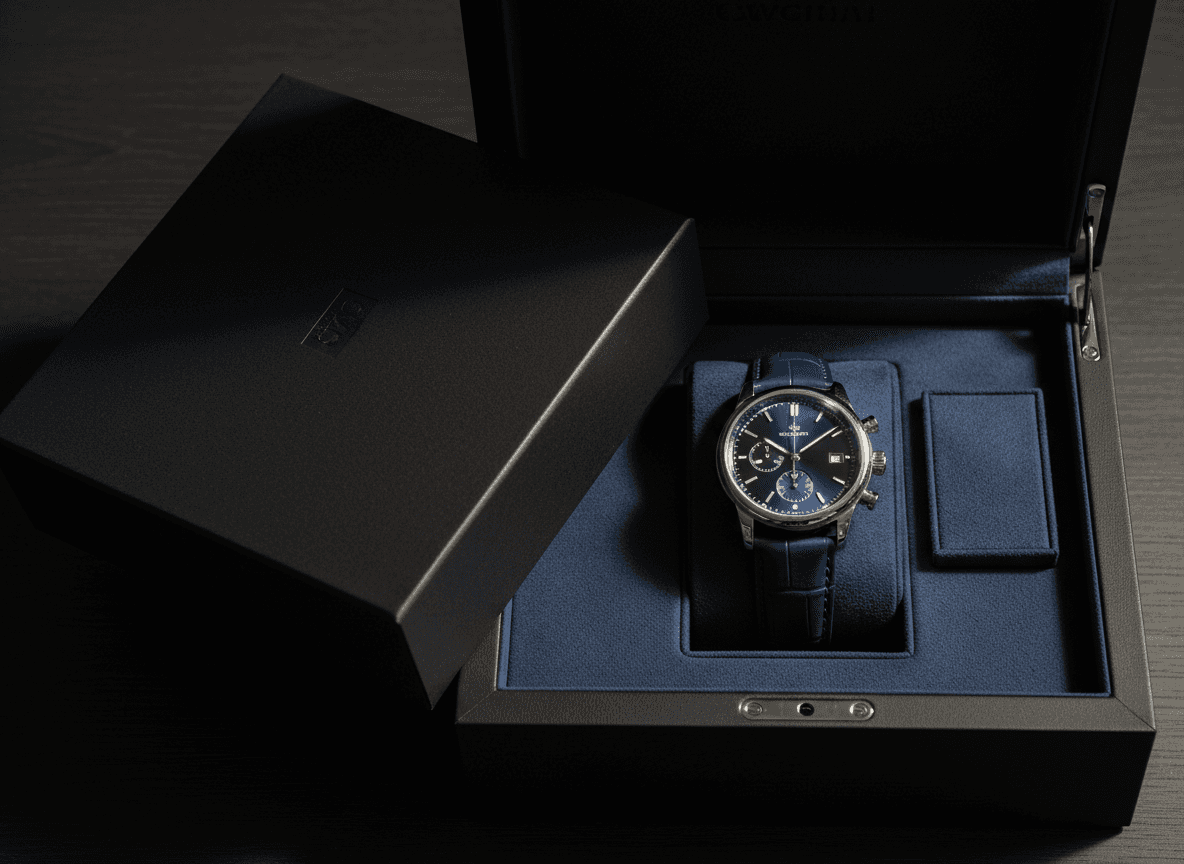
Rigid boxes with premium feel — heavy, matte or soft-touch finish, embossed logo, interior cushioning. Good for luxury / high‑end models.
Branded paper tubes — a sustainable, minimalist, yet premium option; especially fitting for brands with eco-conscious identity or wanting to stand out.
Certified booklets, warranty cards, personalized notes — small touches that add perceived value and build emotional connection.
Limited‑edition packaging — numbering, certificate of authenticity, special design — helps build exclusivity and collector appeal.
4. Case Studies & Brand Examples
Example: A brand that switched from basic packaging to rigid, branded boxes — saw unboxing satisfaction increase, higher referrals, and elevated brand perception among customers. (See above “paper tubes” case.)
In a broader sense: many luxury/historical brands tie physical packaging to brand heritage; packaging becomes part of the story, not just an accessory.
5. Practical Guide: How to Design Packaging for Your Watch Brand
Define your brand identity and values — this influences the style of packaging (luxury/classic / minimalist / eco / contemporary)
Choose materials accordingly — rigid box, soft‑touch finish, paper tube, eco-materials, etc.
Think of unboxing as an experience — layering: outer box → inner box → watch cradle → certificate/warranty → user manual → personalized note. Build a “reveal moment.”
Maintain consistency — packaging style should align with website aesthetic, product photos, social media visuals.
Consider sustainability — both as brand value and marketing advantage. “Green luxury” resonates.
Plan for shipping — packaging must protect watch, especially if shipping globally or long distances.
6. Packaging Checklist for Watch Brands
Does packaging reflect brand identity (logo, colors, finish)?
Is the unboxing experience thoughtful (layers, reveal, details)?
Is the product well protected for shipping?
Are there thoughtful extras (warranty, certificate, note)?
Does packaging match brand values (e.g. sustainability)?
Is packaging cost‑balanced vs. perceived value (not too cheap, not overly expensive)?